Where the 330 gallon non food grade tote fits
When the question is "how much liquid can I keep in one pallet spot for the least money," this combination is usually the answer. It pairs the largest standard caged tote with the grade that most industrial and outdoor buyers need. Non food grade means the previous contents were not food, beverage or ingredient products; what exactly they were varies by lot, so ask and check compatibility with what you plan to store.
Compared with the compact size, the 330 rewards buyers who have the equipment to handle it: a forklift or pallet jack, a level pad, and headroom for the taller cage. In return you get fewer containers to buy, inspect, plumb and move for the same total storage. That is why farms, plants and contractors laying out multi-tote banks usually standardize on it.
Size and build, at a glance
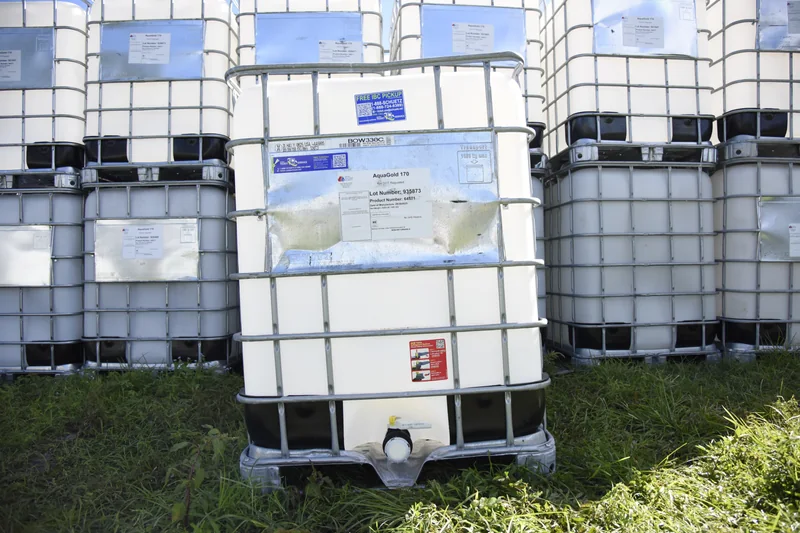
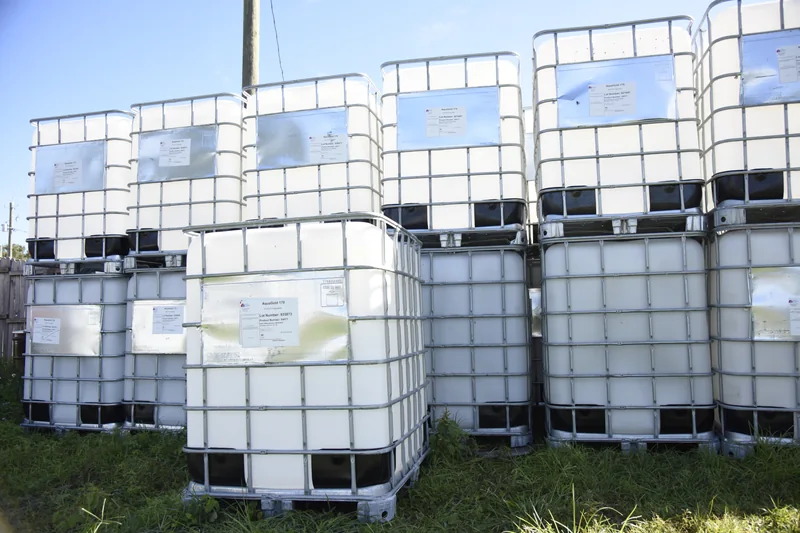
Expect an approximately 48 × 40 inch base, a height of about 53 inches and an empty weight near 150 lb. The typical build is an HDPE bottle in a galvanized steel tubular cage on a forklift-accessible pallet of steel, plastic or composite, with a top cap (commonly 6 inches) and bottom valve (commonly 2 inches). Exact unit details are confirmed with your quote. Both conditions at this capacity are on the 330 gallon IBC totes page, and the non-food-grade IBC totes hub covers this grade across sizes.
Matching condition to the job
| Use | Common condition choice | Why |
|---|
| Rainwater and site water | Used or reconditioned | Depends on prior contents and how much rinsing you want to do |
| Irrigation and fertilizer water | Reconditioned | Less residue to clog emitters or mix with inputs |
| Wash water and rinse holding | Used | Rough service where arrival cleanliness matters less |
| Compatible process liquids | Reconditioned | Cleaner start; confirm compatibility with prior contents |
| Waste and runoff staging | Used | Lowest cost per gallon of holding capacity |
See used non-food-grade IBC totes and reconditioned non-food-grade IBC totes for the condition detail across sizes.
Industries that run on these totes
Agriculture
Water banks for livestock and crops, spray-rig nurse tanks and nursery reserves. More in agriculture and irrigation.
Industrial and manufacturing
Staging compatible liquids, collecting rinse water and holding fluids between steps. More in industrial process storage.
Property and construction
Rain harvesting banks, dust control and temporary site water. More in rainwater and non-potable storage.
Planning a multi-tote installation
Many 330 non food grade buyers link several totes together. A few practical points:
- Base: a full 330 is heavy; set totes on level, solid ground or a pad rated for the load.
- Connections: camlock and threaded adapters let you manifold valves together; browse IBC fittings and adapters.
- Sunlight: outdoor totes benefit from IBC tote covers to limit algae and UV exposure.
- Stacking: empties stack; filled totes often can, but only within the rating on each unit's label and with sound cages and pallets.
- Access: at about 53 inches tall, top filling usually needs a step, platform or fill line.
If you are replacing a mix of drums and smaller containers, remember that one 330 gallon tote takes the place of six standard 55-gallon drums in a single forklift move, with one valve instead of six bungs to manage.
Regulated materials
A non-food history says nothing about hazmat readiness. The UN mark stamped on a caged tote when it was new does not carry forward on its own: under 49 CFR, reusing an IBC for hazardous materials depends on a current periodic test and inspection. Flag regulated contents when you ask for pricing, and treat any tote as untested unless the quote states otherwise.
How it compares with neighbors
The 275 gallon non food grade tote trades 55 gallons of capacity for about 7 inches less height and roughly 15 lb less empty weight; it is the better pick in trailers, barns and low rooms. The 330 gallon food grade tote is the same container with a food or ingredient history, worth paying for only when your use calls for it.
Buying in volume
This combination is the one most often ordered by the truckload. Truckload buyers, at about 60 totes a load, get an individual freight quote and move into the lower per-tote price tiers. Smaller orders ship LTL quoted to your ZIP, and pickup by arrangement is available in Pennsville, NJ and Tampa, FL. Current lot photos are available on request before you commit.
Get a quote on 330 gallon non food grade totes
Send size, condition, grade, quantity, intended use and delivery ZIP via request a quote, or call 484-787-7479. Your quote is where stock, pricing and the specific lot get locked in.
Frequently Asked Questions
What is a 330 gallon non food grade tote used for?
Common uses include rainwater and site water storage, irrigation and livestock water, wash water holding, compatible industrial liquids and waste staging. Confirm the lot's previous contents are compatible with what you plan to store, and clean the tote to suit your application before use.
Can I connect several 330 gallon totes together?
Yes, many buyers manifold totes using camlock or threaded adapters on the bottom valves. Place totes on level, solid ground rated for the filled weight, keep valve heights consistent, and check fittings for leaks after filling. Adapters, valves, caps and gaskets are available as accessories.
Is 330 gallon non food grade cheaper than food grade?
Non food grade totes are usually the more economical option, because food grade history is in higher demand. Exact pricing depends on condition, quantity and the specific lot, and is confirmed with your quote. Larger orders and full truckloads reach lower per-tote pricing tiers.
Do your non food grade totes come UN-rated for hazmat?
Caged IBCs are commonly UN-marked when new, but a reused IBC shipping hazardous materials needs a current periodic test and inspection under 49 CFR. Retest status is something we state only when a quote explicitly includes it, so tell us up front if your contents are regulated.
Where can I pick up 330 gallon non food grade totes?
Both yards, Pennsville in New Jersey and Tampa in Florida, load customer vehicles by appointment. Call ahead so the lot is staged, and size your trailer for the tall cage and the standard pallet footprint; flatbeds and dock-height box trucks both work well.