A tote is one part of a storage or transfer process. The liquid, operating conditions, contact materials and handling plan belong in the same request, so the offered lot can be reviewed against the work it needs to do.
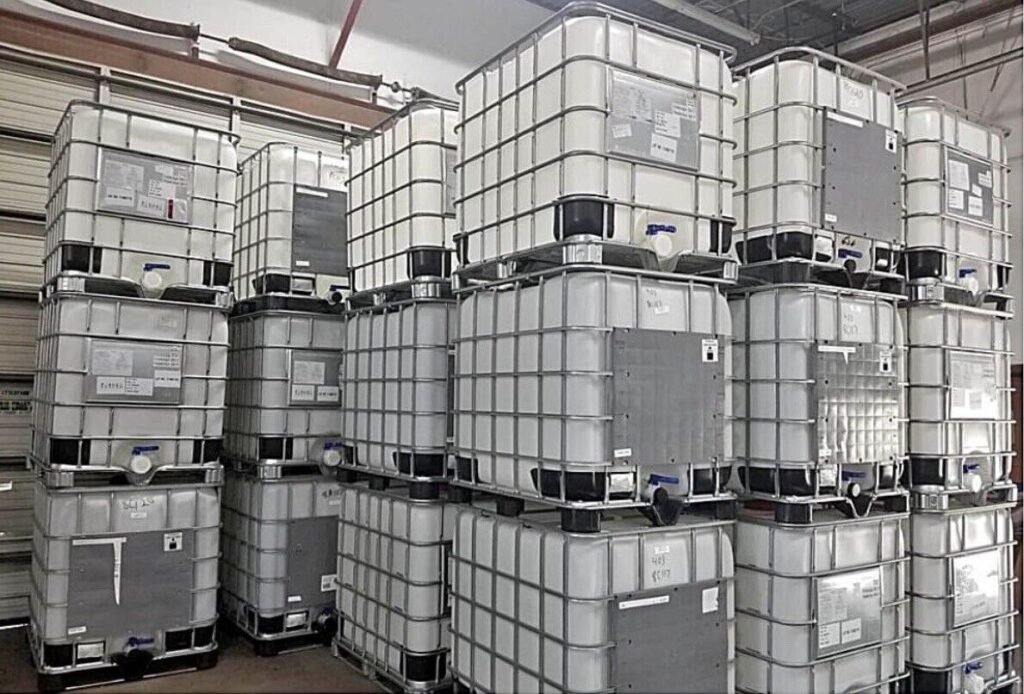
Representative business photo. It does not establish a load rating, chemical compatibility or permitted stacking arrangement.
Define the requirement
A Capacity Is Not a Compatibility Statement
Give the reviewer the exact fluid or mixture, concentration, expected temperature and contact duration. Ask for the actual bottle, valve, gasket and cap materials. “Plastic IBC” and “non-food-grade” are not complete material specifications.
Snyder’s manufacturer guidance asks for chemical identity, concentration and temperature when reviewing storage compatibility. A generic resin recommendation does not verify an unidentified bottle, valve or seal. Read the source guidance.
01
Build a Clear Fluid Profile
Provide the product name and supporting product information. Explain whether the contents will be stored, mixed or transferred, the expected duration and any temperature changes. Ask the chemical supplier and equipment manufacturer to review the actual assembly for those conditions.
02
Request Traceable Lot Details
Ask for the manufacturer or model where identifiable, prior contents, preparation, current photographs and known condition issues. If your process requires records for acceptance, list those records before a price is prepared. Review replacements or modifications as part of the same assembly.
03
Connect the Tote to the Process
Identify the filling and discharge equipment, connection standards, required access and cleaning needs. Include the receiving arrangement and intended handling method. Storage suitability and transport or handling requirements need their own review; a product photo cannot establish either.
Build the specification
Questions to Settle Before Choosing a Lot
Use these questions to organize your request and identify the records or equipment details that still need review.
Compare the actual assembly, preparation and documentation. A catalog label does not establish food safety, drinking-water safety, chemical compatibility or a process rating.
What fluid, concentration, temperature range and contact duration define the process?
Which bottle, valve, gasket and cap materials are documented?
Is the tote for storage, transfer, mixing or transport, and what equipment connects to it?
What prior-content, preparation, inspection and traceability information does the process require?
Who will review compatibility and approve the actual assembly before it enters service?
Connections & accessories
Treat the Seal as Part of the Specification
An adapter that physically attaches can still be unsuitable for the liquid or process. Compare the connection standard, fitting body and gasket materials with the operating requirements. The garden-hose adapter category is a browsing route only; it is not a recommendation for chemical transfer.
No. It is a catalog classification, not a compatibility result. Review the exact fluid and operating conditions against the identifiable materials in the offered tote assembly.
Can I Rely on the Word Stackable or an Image of Stacked Totes?
No load or stacking instruction is supplied here. Obtain the manufacturer’s directions and the actual model and condition details for the proposed handling arrangement.
Bring the Useful Details to Your Inquiry
Supply fluid identity, concentration, temperature and contact duration; quantity and capacity; the process and connection requirements; required documentation; and delivery or pickup needs.