Start with batch size, not price
If your process or storage batch is under about 275 gallons, the 275 keeps the tote closer to full, which means less headspace, less sloshing in transit and fewer part-full totes to track. Batches between 275 and 330 gallons are the clear case for the 330: one tote instead of a tote and a remainder.
Check the height where the tote will live
The 330 is about 7 inches taller. That matters under mezzanines, inside box trucks and vans, on two-high rack beams and anywhere a lid, mixer or fill head has to clear the top of the cage. Measure the opening, then subtract the clearance for a forklift lifting a full tote.
Count the handling equipment
Both sizes are moved with a standard forklift or pallet jack from any side. A full 330 of water is close to 2,900 pounds, so smaller forklifts, scissor-lift ramps and mezzanine floors should be checked against that number, not the empty weight.
Freight is nearly the same per tote
Because the footprint is identical, a 53-foot trailer carries the same count of either size on the floor, and freight is quoted by the load, not by gallons. The 330 therefore moves 20% more liquid for about the same freight, which is why buyers who are limited by truck count lean toward it.
Resale and reuse
The 275 is the more common size in North America, so it is easier to resell, easier to match to existing fittings and the size most rinse-and-return programs are built around. If you are standardizing a fleet, that availability is worth more than the extra 55 gallons.
Fittings are the same
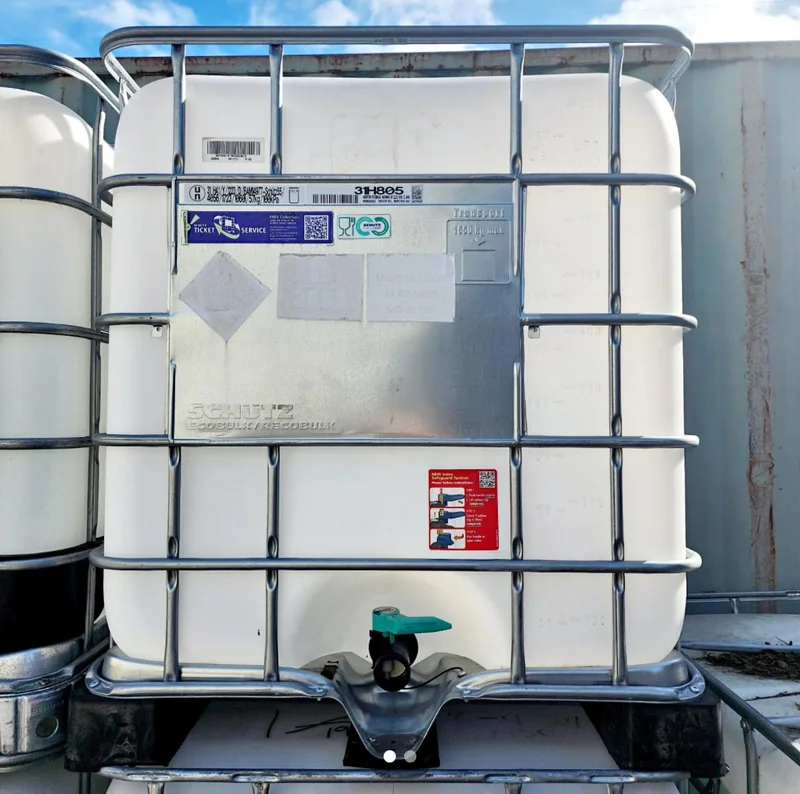
Both sizes use the same 2-inch outlet families (camlock, NPT, buttress) and the same 6-inch fill cap, so garden hose adapters, valves and covers interchange. Valve size and type are still lot-specific; we list them with the offered lot.
Fittings and adapters