Reviewed by Ryan Penick, Operator, Wholesale Industry LLC · Updated October 2026
What "Food Grade" Means on a Used IBC Tote
When you shop food grade IBC totes on this site, the label describes two things: the tote's history and its material. The previous contents were food, beverage or ingredient products, such as sweeteners, edible oils, juice concentrates or flavor bases, and the inner bottle is HDPE suitable for food contact.
What the label does not mean is just as important. A used food-grade tote is not automatically ready for your food product or for drinking water. It is a secondhand container that held a food product before. Whether it suits your use depends on what it held, how it has been cleaned and the rules that apply to your business. We do not claim any food-safety or drinking-water certification for our stock, and we do not describe totes as approved for those uses.
That honesty saves buyers trouble. A tote that held vegetable oil is a different starting point than one that held vinegar or syrup, and a brewery, a farm and a backyard gardener will all need a different level of verification.
Food Grade vs Non-Food-Grade IBC Totes
| Factor | Food-grade totes | Non-food-grade totes |
|---|
| Previous contents | Food, beverage or ingredient products | Industrial, cleaning or agricultural products |
| Bottle material | HDPE suitable for food contact | Typically HDPE; history rules out food reuse |
| Typical next use | Ingredients, livestock water, cleaner water storage, sensitive irrigation | Industrial liquids, wash water, fertilizer, waste collection |
| Buyer verification | Confirm history, cleaning and suitability before food use | Confirm chemical compatibility with new contents |
| Relative cost | Usually higher | Usually lower |
If your liquid will never be eaten, drunk or fed to animals, a non-food-grade IBC tote may be the more economical choice.
Who Buys Food Grade IBC Totes
- Food and beverage producers handling syrups, oils, sauces and liquid ingredients, after their own cleaning and verification. See food and beverage handling.
- Farms storing water for livestock or mixing feed supplements, where a clean food history is preferred over chemical history. See agriculture and irrigation.
- Gardeners and homesteaders who want rainwater stored in a tote that never held industrial chemicals, for garden and other non-potable use.
- Aquaponics and hydroponics growers who want to avoid residues that could affect fish or plants.
- Bakeries, caterers and commissaries holding wash-down water or bulk liquid ingredients, where a food history keeps chemical residue out of the building.
- Breweries, wineries and cideries using totes for process water, spent liquids or, after verification, ingredient storage.
Used vs Reconditioned Food Grade Totes
Used food grade
Sold as returned from service. Expect residue from the food product it carried. A good fit if you have a wash setup and want the lowest entry point. Shop used food-grade IBC totes.
Reconditioned food grade
Rinsed and inspected. Ask what preparation and component work was done on the lot. Shop reconditioned food-grade IBC totes.
Either way
Plan your own sanitation and verification step before any food contact. Rinsing is a starting point, not a sign-off.
Sizes of Food Grade IBC Totes
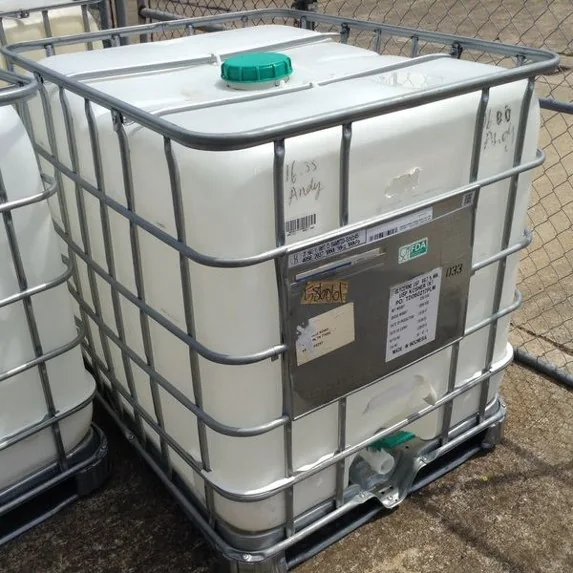
Both caged sizes are listed in food grade. The 275 gallon food-grade tote is approximately 40 × 48 × 46 in and about 135 lb empty. It suits smaller kitchens, farm buildings and anywhere ceiling height or forklift reach is limited. The 330 gallon food-grade tote is approximately 48 × 40 × 53 in and about 150 lb empty, giving more volume per floor spot for producers moving larger batches.
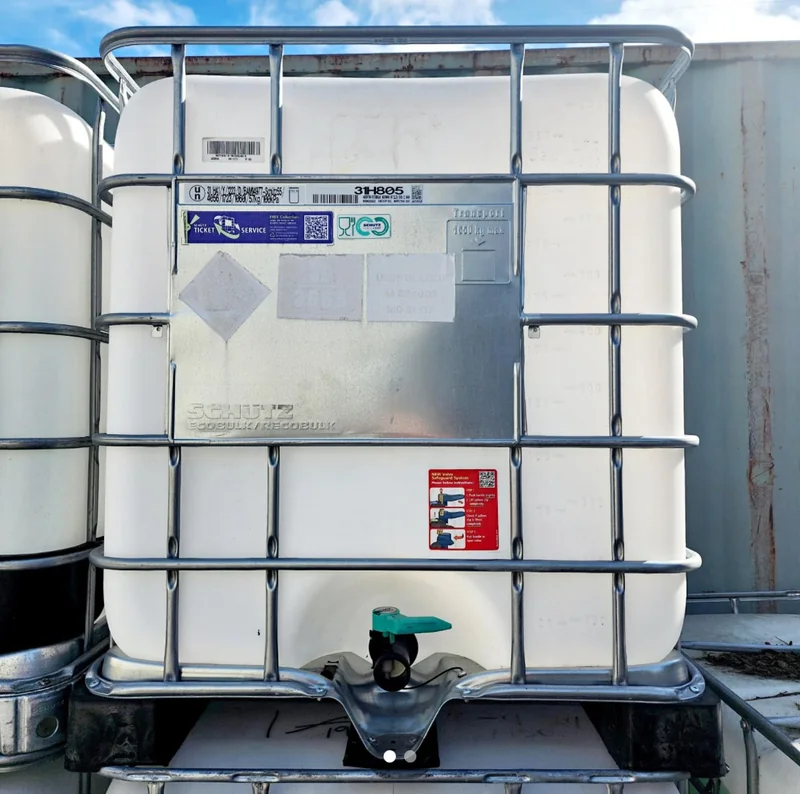
Both are typically built with an HDPE inner bottle, galvanized steel cage, pallet base, a top fill cap commonly 6 inches across and a bottom valve commonly 2 inches.
How to Verify a Food Grade Tote for Your Use
Work through these steps before putting anything consumable into a used tote:
- Confirm the previous contents. Ask for the lot history. Note allergens such as nut oils, dairy or soy if they matter to your operation.
- Check compatibility. A tote that held a strongly flavored or colored product, such as vinegar, molasses or a flavoring concentrate, may carry odor or staining into a sensitive product.
- Review the cleaning. For reconditioned totes, ask what preparation was done. For used totes, plan your own wash.
- Inspect the interior. Use a light to look for film, scratches that could trap residue and discoloration.
- Check the wetted parts. The valve, gaskets and cap touch your product too. Many food users replace gaskets and sometimes the valve. Parts are on the IBC fittings and adapters page.
- Apply your own sanitation step using methods appropriate for HDPE and your process.
- Check your rules. Confirm any regulatory, customer or audit requirements for containers in your business. If the tote must hold drinking water, verify suitability independently rather than relying on the grade label.
How Previous Contents Affect Reuse
Food histories are not all equal. These general patterns help you judge a lot before you ask for a quote:
- Sugars and syrups such as corn syrup, glucose or liquid sugar dissolve in warm water and usually rinse out readily. They are a common, versatile starting point, though any residue left behind can feed mold or bacteria if the tote sits wet.
- Edible oils leave a film that water alone will not lift. Plan on a degreasing wash suited to HDPE. Oil-history totes are often reused for oils again or for non-food purposes.
- Juice concentrates and fruit bases can stain the bottle and leave a scent. Staining is mostly cosmetic but matters for clear or light-colored products.
- Vinegars, flavorings and spice extracts carry strong odors that can migrate into whatever goes in next. Best kept to like-for-like reuse or non-food work.
- Dairy, egg or protein-based ingredients need especially thorough cleaning and are an allergen consideration.
If a history does not fit your product, tell us. Matching the lot to your use is easier before the quote is finalized than after the totes are on your dock.
Inspection Points Beyond Cleanliness
Food history does not protect a tote from physical wear. Look for cracks, sun-chalked bottle walls, bent cage tubes at the top corners, broken pallet runners and a valve that weeps when closed. A legible label plate with the stacking rating is also worth confirming, especially if you plan to stack filled totes in a cooler or warehouse.
Storing Food Grade Totes Properly
- Shade them. Sunlight degrades HDPE and grows algae in water. An IBC tote cover blocks light and keeps the outside cleaner.
- Keep caps closed. Dust, insects and pests are the fastest way to spoil a clean tote.
- Vent when draining. Loosen the top cap or open the vent so air can enter; otherwise flow slows and the bottle can pull inward.
- Watch temperature. Freezing can crack bottles and valves; warm syrups and oils may need temperature limits suitable for HDPE.
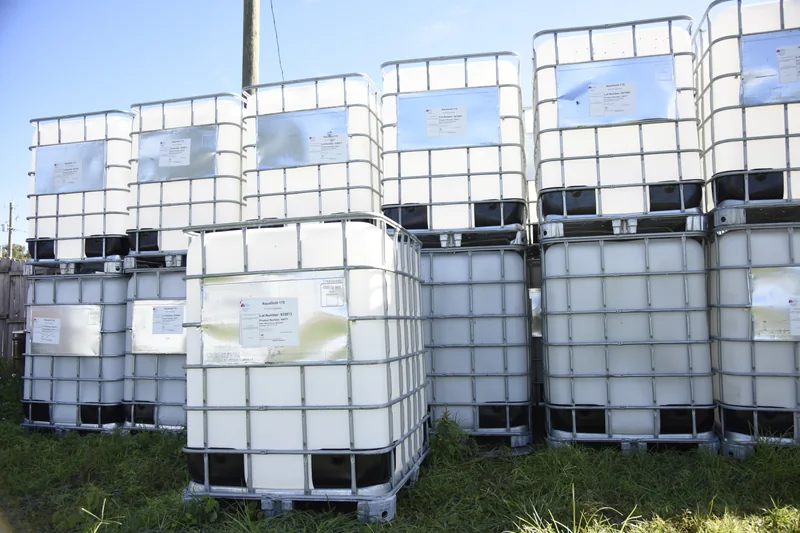
- Stack carefully. Only on level floors and only within the rating on the unit's label.
- Dedicate them. Keep food-history totes separate from totes used for chemicals so they do not get mixed up later.
Pricing Factors for Food Grade IBC Totes
Food-grade lots are more restricted by history than industrial lots, and price depends on size, condition, the specific lot history and any component work. Quantity tiers lower the per-tote price for larger orders, and full truckloads of about 60 totes are quoted individually. Freight is quoted to your ZIP, or you can arrange pickup at our Pennsville, NJ or Tampa, FL yard. Availability and price are confirmed with your quote.
How to Order Food Grade IBC Totes
Send the size, condition (used or reconditioned), grade (food), quantity, intended use and delivery ZIP. For food grade orders, also describe the product you plan to store and any histories you need to avoid, such as allergens or strong flavors. We will match a lot where possible and confirm photos, lot history, availability and freight with your quote. Use the request a quote page or call 855-620-3426. Compare grades side by side on shop by grade, or go back to the main IBC totes guide.
Frequently Asked Questions
What makes an IBC tote food grade?
On this site, a food-grade IBC tote is one whose previous contents were food, beverage or ingredient products and whose HDPE bottle is suitable for food contact. The grade describes history and material. It is not a certification, and a used tote still needs verification before food reuse.
Can I store drinking water in a food grade IBC tote?
Not without your own verification. A used food-grade tote is not automatically suitable for drinking water. Confirm the previous contents, clean and sanitize the tote, check the valve and gaskets, and verify suitability for your application and any regulations. We do not claim drinking-water approval for our stock.
What did your food grade totes hold before?
Previous contents vary by lot and can include products such as sweeteners, edible oils, juice concentrates and flavor bases. Ask for the history of the specific lot offered in your quote so you can avoid allergens or strong flavors that matter to your operation.
Should I buy used or reconditioned food grade totes?
Reconditioned food-grade totes arrive rinsed and inspected, which saves cleaning time. Used food-grade totes are sold as returned and need washing first, but they cost less. Either way, plan your own sanitation and verification before the tote holds anything consumable.
Are food grade IBC totes good for livestock water?
Many farms prefer food-grade totes for livestock water because the previous contents were food products rather than industrial chemicals. Clean the tote, cover it to limit algae, protect it from freezing and confirm it suits your animals and any rules that apply to your operation.
Do I need to replace the valve on a food grade tote?
Not always, but the valve and gaskets touch your product, so inspect them closely. Many food users replace gaskets and sometimes the valve before use. Replacement valves, caps and gaskets are available as accessories and can be added to the same quote.
Are food grade IBC totes more expensive?
Food-grade totes usually cost more than non-food-grade totes because demand is higher and lot histories are more restricted. Price also depends on size, condition, quantity and freight, and is confirmed with your quote. Larger orders lower the per-tote price.